World Cup 2026 Outright Markets
 Available in US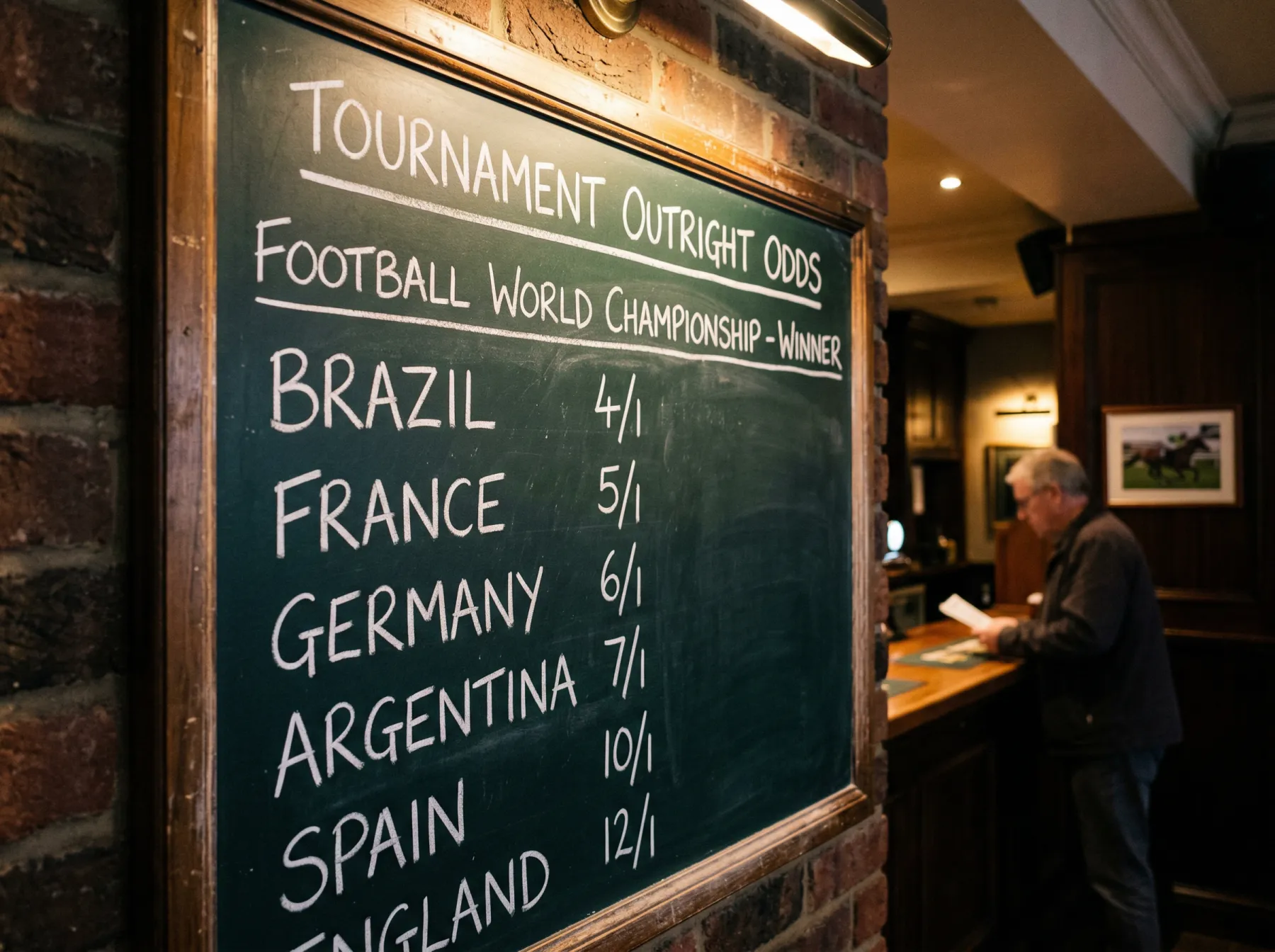
The moment the draw concluded, the odds began shifting. I watched the markets move in real-time that Sunday evening, refreshing multiple bookmaker screens while the analysis took shape. Brazil drifted slightly when their Group C assignment revealed Morocco and Scotland as opponents. England shortened when the relatively kind Group L emerged. Argentina held steady as defending champions, the market respecting their 2022 triumph while questioning whether lightning strikes twice.
Pricing a World Cup outright market represents one of betting’s greatest challenges. Forty-eight teams, seven knockout rounds, thirty-nine days of football across three countries. The variables multiply beyond simple squad quality assessments. Form cycles, injury timing, venue logistics, bracket paths, and psychological momentum all influence outcomes. Yet the market must produce a number, a price that balances probability against implied value. Understanding how these prices form, where they contain inefficiencies, and when they shift creates the foundation for profitable World Cup betting.
I have tracked World Cup odds movements across four tournament cycles now. Certain patterns repeat. The market overprices recent winners and underprices rising powers. Golden Boot odds cluster around obvious names while overlooking structural factors that determine goalscoring opportunity. Group winner markets assume linear relationships between squad quality and results, ignoring tactical matchups and schedule sequencing. These inefficiencies exist because casual punters dominate World Cup betting volumes, inflating prices on recognisable names and creating value elsewhere.
What follows is my complete breakdown of the World Cup 2026 odds landscape. From outright winner markets to Golden Boot selections, from group winner prices to tournament specials, I will identify where the value sits and where the traps lurk. Irish punters deserve analysis calibrated to our preferred fractional format while acknowledging the decimal prices that dominate online platforms. The tournament begins in June. Your betting positions should take shape now.
Use these numbers to refine your World Cup 2026 winner prediction.
Outright Winner Odds: The Full Market
The outright winner market forms the centrepiece of World Cup betting. Every punter wants to call the champion before a ball is kicked. The bragging rights alone justify the wager. But the market structure demands careful navigation. Let me walk you through the current odds landscape and what each price implies about probability and value.
France sit as joint-favourites at 9/2 (5.50), sharing top billing with Brazil. The French price reflects their extraordinary squad depth and tournament pedigree, having reached three of the last four World Cup finals. Kylian Mbappé leads an attack that includes Antoine Griezmann, Marcus Thuram, and Randal Kolo Muani. Their midfield combines experience and athleticism. Defensively, questions persist about the centre-back partnership, but Didier Deschamps’ pragmatic approach tends to paper over individual weaknesses. At 9/2, France offer implied probability around 18%. I assess their true probability closer to 15%, making them slight fade material.
Brazil share that 9/2 price despite their twenty-four-year trophy drought. The Seleção enter with a squad rebuilt around Vinícius Jr, Rodrygo, and Endrick, abandoning the failed experiments of recent cycles. New management has simplified their approach, trusting technical quality over tactical complexity. Their Group C draw presents no significant obstacles before the knockout rounds. The argument for Brazil centres on raw talent concentration. No other squad possesses their attacking firepower. The argument against centres on defensive fragility and emotional volatility under pressure. At 9/2, Brazil carry similar value concerns to France.
Argentina follow at 5/1 (6.00) as defending champions. The pricing implies roughly 16% probability, acknowledging their 2022 triumph while discounting the inevitable aging of key players. Lionel Messi’s participation remains the central question. At thirty-eight, his legs have slowed even as his football intelligence deepens. If Messi plays and performs, Argentina become genuine favourites. If Messi is absent or diminished, they become merely one contender among many. The market essentially prices in partial Messi availability. I would want longer odds to back the defence, though Argentina’s each-way credentials remain compelling.
England occupy the 6/1 (7.00) slot that has become their permanent tournament residence. English supporters joke that “it’s coming home” while secretly fearing it never will. The squad quality genuinely supports shorter prices. Jude Bellingham, Phil Foden, Bukayo Saka, and Declan Rice form a core that rivals any tournament favourite. Yet England’s knockout record haunts their pricing. They have lost semi-finals and finals in agonising fashion, developing a psychological fragility that markets cannot quantify. At 6/1, England represent fair value rather than opportunity.
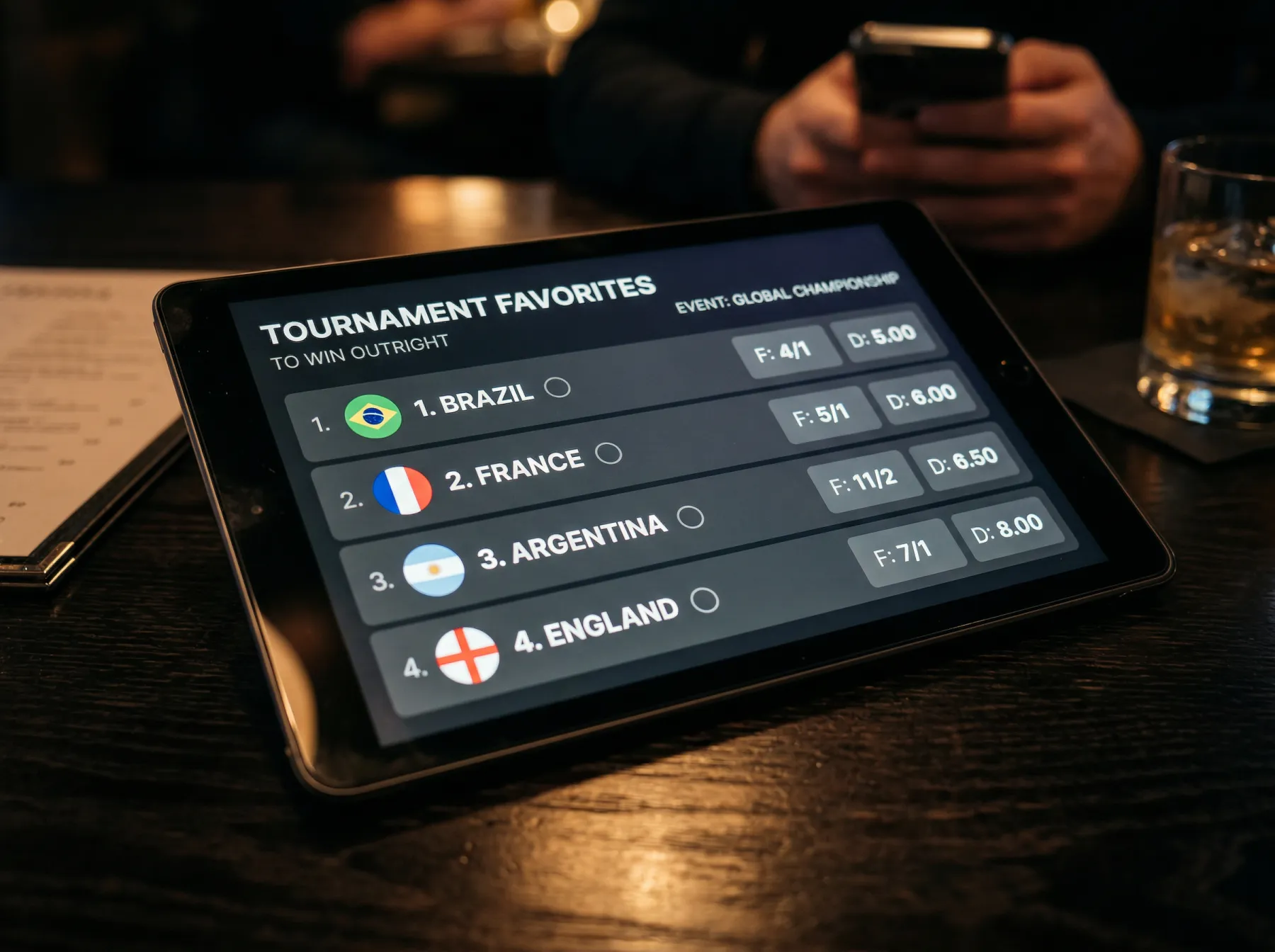
Spain at 7/1 (8.00) reflect the market’s appreciation for their Euro 2024 triumph and generational talent emergence. Lamine Yamal turns nineteen during the tournament, already established as a world-class winger. Pedri and Gavi command midfield despite their youth. Rodri provides the defensive anchor. Spain’s price has shortened significantly since their European Championship victory, perhaps too aggressively. They lack a proven tournament-winning centre-forward, and their defensive options remain unproven at the highest level. I consider 7/1 about right, neither value nor trap.
Germany at 10/1 (11.00) present the tournament’s most interesting pricing decision. The hosts’ home-tournament advantage from Euro 2024 evaporates when they travel to North America. Their squad contains genuine quality in Florian Wirtz, Jamal Musiala, and Kai Havertz, but lacks the defensive solidity of previous German generations. At 10/1, Germany offer enough upside to warrant consideration, though their true probability sits around the 9% the odds imply.
The rest of the market fans out from Portugal at 12/1 through Netherlands and Belgium at 14/1 to the genuine longshots beyond 50/1. Uruguay at 33/1 carry tournament pedigree that exceeds their squad quality. Morocco at 40/1 remember their 2022 semi-final run. Scotland at 150/1 represent pure hope over expectation. Each price tells a story, and reading those stories correctly separates profitable punters from those merely subsidising the bookmaker’s margins.
Our Ante-Post Value Picks
Value exists where the market’s probability assessment diverges from your own. The challenge lies in calibrating your assessment accurately enough to exploit those divergences. I have identified four outright positions where current pricing underestimates true tournament probability.
Portugal at 12/1 (13.00) anchor my value selections. The market still prices them as a Ronaldo team, but the squad has evolved beyond that singular dependency. Bruno Fernandes orchestrates from midfield with world-class creativity. Rafael Leão provides explosive wide threat. Rúben Dias and the defensive structure have matured under Fernando Santos’ successor. Portugal’s bracket path from Group K looks favourable, with DR Congo, Uzbekistan, and Colombia presenting manageable obstacles. Their knockout draw places them on the same half as several favourites, but also offers potential routes that avoid Brazil and France until the final. At 12/1, Portugal carry roughly 7.5% implied probability. I assess them closer to 10%, making this price a genuine overlay.
Netherlands at 14/1 (15.00) present similar dynamics. Dutch football has recaptured the technical identity that defined their greatest eras. Virgil van Dijk commands the defence. Frenkie de Jong controls midfield tempo when fit. The attacking options include Cody Gakpo, Memphis Depay, and emerging talents from the Eredivisie pipeline. Group F requires navigating Japan, Sweden, and Tunisia, a quartet where any result seems possible but the Dutch remain clear favourites. Their tournament ceiling depends on whether young attackers mature into consistent performers. At 14/1, the price acknowledges their quality while building in significant uncertainty. I consider this fair to slightly underpriced.
Uruguay at 33/1 (34.00) deserve each-way consideration. The market dismisses them as aging former powers, overlooking their World Cup DNA. Luis Suárez and Edinson Cavani have departed, but Darwin Núñez and a refreshed attacking corps have emerged. Federico Valverde provides world-class midfield dynamism. The defensive organisation that has defined Uruguayan football persists across generations. Their Group H assignment places them alongside Spain, Cape Verde, and Saudi Arabia. Finishing second behind Spain seems probable, yielding a knockout path that could extend into the latter stages before facing elite opposition. At 33/1, Uruguay’s each-way value outweighs their outright price.
Morocco at 40/1 (41.00) tempt based on 2022 evidence. The Atlas Lions proved their semi-final run was no fluke by maintaining competitive form since Qatar. Achraf Hakimi, Youssef En-Nesyri, and Sofiane Boufal provide individual quality. The collective defensive resilience that frustrated Spain and Portugal remains intact. Group C with Brazil, Scotland, and Haiti presents challenges, but Morocco have demonstrated they can compete with Brazilian sides. Their each-way prospects at 40/1 make them attractive for small-stakes outright wagers. The probability of reaching another semi-final exceeds what 40/1 implies.
My recommended staking distributes across these four selections: one unit on Portugal at 12/1, one unit on Netherlands at 14/1, half unit each-way on Uruguay at 33/1, and quarter unit each-way on Morocco at 40/1. This portfolio approach spreads risk while concentrating exposure on the prices I consider most mispriced. The combined outlay represents modest investment against potential returns exceeding twelve units on the longest shot.
Golden Boot Odds: Who Scores the Goals?
The Golden Boot market attracts casual punters like moths to flame. Everyone wants to back the tournament’s top scorer, imagining their selection firing goals past hapless defences en route to glory. The reality proves more complicated. Golden Boot outcomes depend as much on opportunity as ability, on how deep your team progresses, and on how your manager utilises you within their system.
Kylian Mbappé heads the market at 6/1 (7.00), the predictable favourite given France’s tournament pedigree and his central attacking role. The case for Mbappé centres on his explosiveness, his penalty-taking responsibility, and France’s expected deep tournament run. The case against acknowledges that Mbappé has underperformed his club form at previous World Cups, managing four goals across two tournaments despite playing in semi-finals and finals. At 6/1, Mbappé represents the market’s tribute to obvious quality rather than a genuine value assessment.
Erling Haaland follows at 8/1 (9.00), the name everyone wants to back despite significant structural concerns. Norway qualified for their first major tournament in twenty years, but their supporting cast cannot create the chances Haaland devours at Manchester City. Without Kevin De Bruyne’s through balls and Rodri’s platform, Haaland becomes a target man hoping for service rather than a predator receiving it. Norway’s expected group-stage exit further limits his games played. Group I contains France, Senegal, and Iraq. If Norway finish third and progress, they might play four matches. If they exit in the group stage, Haaland plays three. At 8/1, the price ignores these opportunity constraints.
Vinícius Jr at 10/1 (11.00) presents more interesting dynamics. Brazil’s primary creator and finisher should see abundant scoring chances if the Seleção progress deep. His left-wing position means he operates inside the area less frequently than a pure striker, but his goal involvement has increased each season. The expanded tournament format means more matches for teams reaching the final, potentially seven games rather than six. At 10/1, Vinícius offers value if you believe Brazil will reach at least the semi-finals.
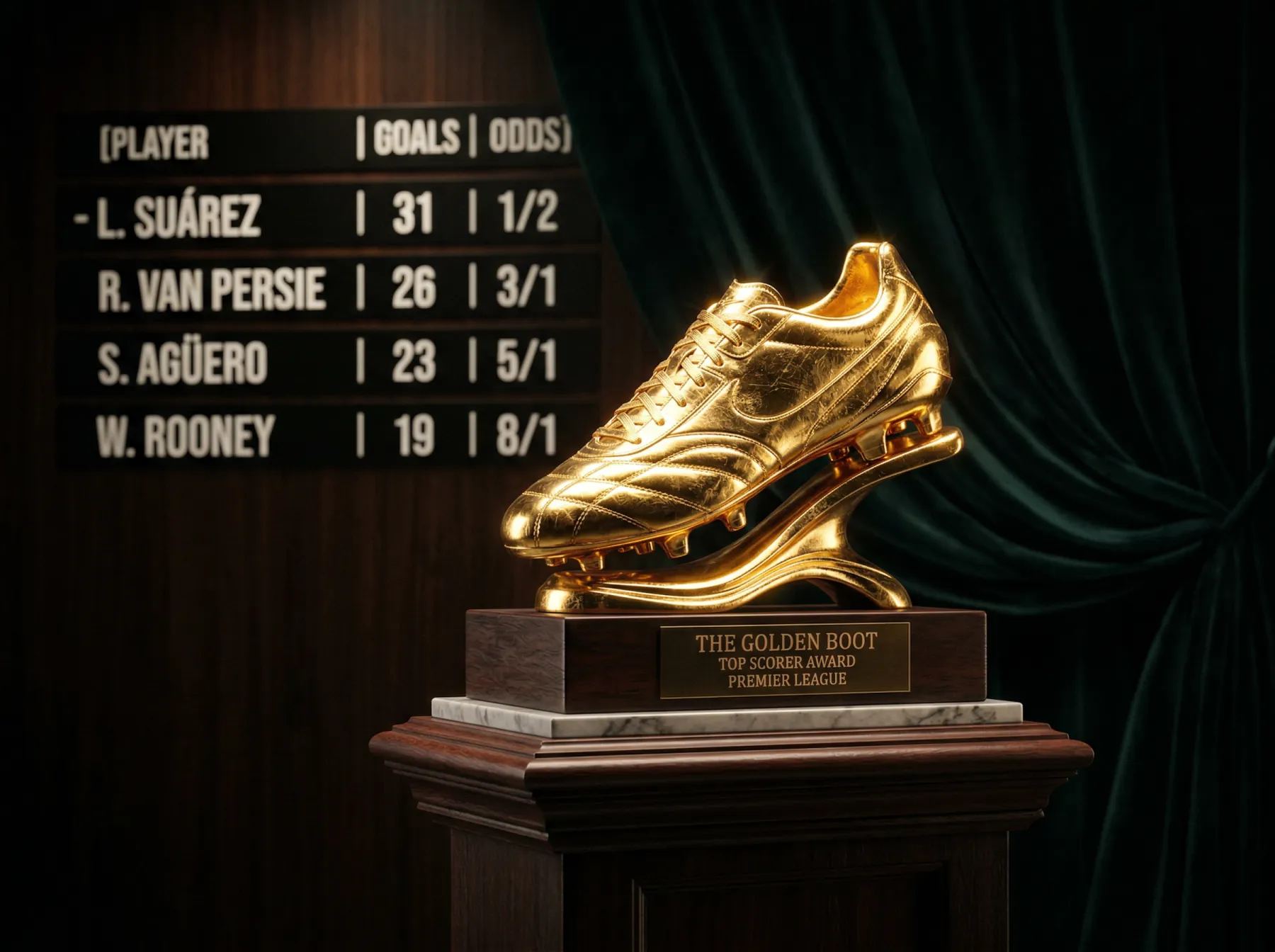
Harry Kane at 12/1 (13.00) carries the tournament history that supports shorter prices. Kane won the Golden Boot at the 2018 World Cup with six goals, benefiting from England’s penalty awards and group-stage matches against Tunisia and Panama. If similar fixtures materialise in 2026, Kane’s penalty prowess becomes decisive. England’s Group L contains Panama again, plus Croatia and Ghana. The pattern could repeat. At 12/1, Kane represents fair value based on opportunity and conversion ability.
My Golden Boot strategy targets players whose opportunity exceeds their market position. Darwin Núñez at 25/1 (26.00) leads Uruguay’s line with explosive finishing ability. If Uruguay navigate Group H and progress, Núñez could face defensive sides where his pace creates chances. Julián Álvarez at 20/1 (21.00) would benefit enormously if Messi’s involvement decreases, absorbing additional attacking responsibility. Randal Kolo Muani at 33/1 (34.00) has established himself as France’s backup striker and would receive extended minutes if Mbappé carries injury concerns.
The structural advice for Golden Boot betting: favour players on teams expected to reach semi-finals or beyond, prioritise penalty takers over non-takers, and accept that the market’s favourite wins roughly 15% of the time. Spreading stakes across multiple selections outperforms concentration on single names.
Group Winner Odds Across All 12 Groups
Group winner markets offer structure that outright betting lacks. Three matches, four teams, and a clear hierarchy to identify. The challenge lies in distinguishing genuine value from mispriced near-certainties. Let me survey each group and identify where the opportunities hide.
Group A positions Mexico as heavy favourites at 4/6 (1.67) to top their home group. The price reflects their Azteca advantage and manageable opposition in South Korea, South Africa, and Czechia. I consider this price fair but lacking value. South Korea at 3/1 (4.00) offer the upset potential, carrying 2002 memories and a technically proficient squad that could steal first place through superior goal difference.
Group B presents Canada at 6/4 (2.50) against Switzerland at 2/1 (3.00), Bosnia and Herzegovina at 9/2 (5.50), and Qatar at 9/1 (10.00). The Swiss represent my value play here. Their tournament consistency exceeds Canada’s inexperience at this level. Alphonso Davies provides Canada with world-class quality, but Switzerland possess greater squad depth and tactical maturity. At 2/1, Switzerland offer overlay against the Canadian favourite.
Group C features Brazil at 2/5 (1.40), prohibitive pricing that offers no value regardless of analysis. Morocco at 5/1 (6.00) represent the alternative for those believing the 2022 semi-finalists can upset the Seleção. Scotland at 12/1 (13.00) require romantic attachment rather than analytical justification. Haiti at 100/1 exist purely as accumulator fodder for the delusional optimist.
Group D places the United States at 4/5 (1.80) to top their home group against Paraguay, Australia, and Turkey. The American price reflects home advantage across all three venues. Turkey at 3/1 (4.00) carry the volatility to upset this market. Their attacking talent exceeds their inconsistency, and a focused Turkish campaign could challenge American hegemony. At 3/1, Turkey warrant speculative consideration.
Group E makes Germany unbackable at 1/3 (1.33), leaving the remaining spots for contrarians. Côte d’Ivoire at 5/1 (6.00) bring African Championship-winning quality to a group featuring Curaçao’s World Cup debutants and Ecuador’s uneven form. The Ivorians could genuinely challenge for top spot if Germany’s defensive issues manifest early. Speculative value exists at 5/1.
Group F presents the tournament’s most competitive pricing. Netherlands lead at evens (2.00), followed by Japan at 3/1 (4.00), Sweden at 6/1 (7.00), and Tunisia at 10/1 (11.00). I favour Japan here. Their European-based squad has eliminated Germany and Spain in recent tournaments. The Japanese tactical sophistication under Hajime Moriyasu gives them genuine top-seed credentials. At 3/1, Japan represent my strongest group winner value play.
Group G positions Belgium at 4/7 (1.57) against Egypt, Iran, and New Zealand. Belgium’s aging squad no longer justifies such short prices. Egypt at 7/2 (4.50) with Mohamed Salah leading their attack offer genuine upset potential. The market underprices Egyptian quality based on outdated assessments of African football. At 7/2, Egypt deserve attention.
Group H features Spain at 1/4 (1.25), essentially a single-team market. Uruguay at 4/1 (5.00) represent the sole alternative, though topping the group above Spain requires either Spanish rotation or unexpected results. I would not back either at current prices.
Group I makes France prohibitive at 1/5 (1.20), leaving scraps for alternatives. Senegal at 6/1 (7.00) and Norway at 8/1 (9.00) compete for speculative backing. Neither represents genuine value against the French pricing.
Group J positions Argentina at 2/7 (1.29) with similar dynamics. Algeria at 7/1 (8.00) bring African talent but face a defending champion in full confidence. Austria at 9/1 (10.00) possess tactical sophistication under Ralf Rangnick but lack the finishing quality to trouble Argentina consistently.
Group K places Portugal at 4/9 (1.44) against Colombia at 7/4 (2.75), DR Congo at 16/1 (17.00), and Uzbekistan at 25/1 (26.00). Colombia represent my value selection. Néstor Lorenzo has restored their attacking identity, and Luis Díaz provides world-class thrust. At 7/4, Colombia offer genuine value against Portuguese pricing that may reflect historical reputation more than current form.
Group L features England at 4/7 (1.57), Croatia at 9/4 (3.25), Ghana at 12/1 (13.00), and Panama at 20/1 (21.00). Croatia’s tournament pedigree justifies their 9/4 price as a value alternative to English favourite status. Luka Modrić’s final World Cup provides narrative energy that could translate into results.
Tournament Specials: Total Goals, Red Cards and More
Beyond the headline markets lie the specials, the exotic wagers that bookmakers offer to capture casual interest and generate margin. Some represent genuine betting opportunities. Others exist purely to extract money from undisciplined punters. Learning to distinguish between them improves your overall World Cup returns.
Total tournament goals markets attract attention every cycle. The line typically sits around 160.5 goals for a sixty-four-match, thirty-two-team World Cup. The 2026 expansion to 104 matches shifts this calculation substantially. I expect the line around 260.5 goals, implying roughly 2.5 goals per match. Historical data suggests World Cup matches average between 2.3 and 2.7 goals depending on format and era. The expanded tournament introduces more mismatches in the group stage, where favourites face genuine minnows. These fixtures should push the average toward the higher end. I lean toward overs on total goals, expecting the early rounds to produce scorelines that inflate the aggregate.
Red card markets follow similar logic. More matches mean more opportunities for dismissals. The base rate hovers around one red card per eight matches at previous World Cups. Applying this to 104 matches suggests thirteen red cards as the over/under pivot. The emotional intensity of knockout rounds increases dismissal probability, and the expanded bracket provides more elimination fixtures where players take desperate measures. I would back overs on tournament red cards if the line sits at twelve or below.
Highest-scoring group markets offer interesting asymmetric opportunities. Groups containing clear favourites against weak opposition should produce goals. Group E with Germany facing Curaçao and Group H with Spain facing Cape Verde both project high-scoring. At typical prices around 8/1 per group, backing multiple groups requires confidence in your selections but offers coverage against variance. I would place small stakes on Group E and Group H as highest-scoring candidates.
Penalty shootout markets typically offer odds on whether any match reaches spot-kicks. Given the expanded knockout stage and seven elimination rounds per finalist, the probability of at least one shootout approaches certainty. The market usually prices this around 1/16, offering minimal return for near-guaranteed outcome. More interesting are markets on total penalty shootouts, where the over/under might sit at 3.5 across the tournament. I expect at least four shootouts and would back overs if available at reasonable prices.
Clean sheet markets for specific teams reward defensive analysis. England’s knockout-round clean sheet record exceeds their reputation for tournament failure. Germany historically concede in knockout matches despite their winning pedigree. Morocco’s defensive discipline from 2022 suggests clean sheet value in their group fixtures. These markets offer edges when the pricing ignores specific tactical identities.
Reading the Market: How Odds Shift and Why
The World Cup 2026 odds you see today will not match the odds available in June. Markets move constantly, responding to information, money flows, and sentiment shifts. Understanding these dynamics helps you time your wagers optimally and interpret market signals correctly.
The draw creates the first major movement window. Before the group assignments, markets price teams based purely on squad quality and historical performance. The draw introduces structural factors: opponent strength, venue assignments, and bracket implications. Watch how prices move in the hours after the draw completes. Sharp money enters quickly to exploit newly created inefficiencies. If a team’s price shortens dramatically post-draw, the market has identified favourable conditions you should note. If a team drifts significantly, the bracket or group assignment has diminished their probability in ways you should consider.
Injury news drives the most volatile movements. A torn ACL for a star player can shift outright odds by several points within hours. The key lies in distinguishing between genuine injury impact and market overreaction. Losing a squad player matters less than losing a system-defining star. When Vinícius Jr misses training, Brazil’s odds drift. When their fourth-choice midfielder picks up a knock, the market barely registers. React proportionally to injury news rather than following every twitch.
Friendly match results in the preparation window influence casual punters more than sharp money. A 3-0 victory over a weak opponent shortens odds despite providing minimal information about tournament readiness. A 1-1 draw against a quality side lengthens odds despite potentially indicating tactical experimentation. The pre-tournament friendly window offers opportunities to fade overreactions. If a favourite loses a meaningless warm-up match, their price may drift to value territory before recovering as the tournament approaches.
Money flows from different market segments create predictable patterns. English punters back England regardless of value, shortening Three Lions odds below their true probability. Irish and Scottish money flows toward Celtic nations, affecting Scotland’s price. Brazilian and Argentinian diaspora communities bet patriotically, influencing South American favourites. These nationality biases create structural inefficiencies that persist throughout the tournament cycle. Fading heavily backed national teams often yields positive expected value over sufficient sample sizes.
The final week before tournament kickoff sees liquidity surge. Bookmakers tighten margins and become more responsive to large wagers. This window typically offers the best prices for well-researched positions, as the market reaches maximum efficiency. If you have strong views, place your primary stakes in this final window rather than months ahead when uncertainty commands higher margins.
Your Quick Guide to Fractional Odds
Irish punters grew up with fractional odds on every betting shop wall. The format feels natural to us, intuitive in a way that decimal prices never quite achieve. Yet online platforms increasingly default to decimal display, and understanding the conversion keeps you fluent across both systems.
Fractional odds express your potential profit relative to your stake. If you back a selection at 5/1, you receive five pounds profit for every pound staked, plus your original pound returned. A ten-pound wager at 5/1 returns sixty pounds total: fifty pounds profit plus ten pounds stake. The numerator shows profit, the denominator shows stake, and the relationship remains constant regardless of how much you wager.
Converting to decimal requires simple arithmetic. Add the two numbers in the fraction, then divide by the denominator. For 5/1, that calculation runs: 5 plus 1 equals 6, divided by 1 equals 6.00. The decimal price 6.00 means your total return equals six times your stake. A ten-pound wager at 6.00 returns sixty pounds, identical to the 5/1 fractional calculation. The formats express the same probability differently.
Common fractional prices and their decimal equivalents deserve memorisation. Evens (1/1) equals 2.00. 2/1 equals 3.00. 5/2 equals 3.50. 3/1 equals 4.00. 7/2 equals 4.50. 4/1 equals 5.00. 9/2 equals 5.50. 5/1 equals 6.00. These conversions cover the range where most World Cup betting occurs. Outright prices beyond 10/1 follow the same pattern: 10/1 equals 11.00, 20/1 equals 21.00, 33/1 equals 34.00.
Implied probability requires another conversion step. Divide 1 by the decimal price, then multiply by 100 to get a percentage. At 5/1 (6.00), the calculation runs: 1 divided by 6 equals 0.167, multiplied by 100 equals 16.7%. The market implies roughly a one-in-six chance of success. Understanding implied probability helps you assess whether the price offers value against your own probability estimate.
When bookmakers offer fractional prices like 11/8 or 5/4, the conversion becomes trickier. 11/8 converts to 2.375 decimal (11 plus 8 equals 19, divided by 8 equals 2.375). 5/4 converts to 2.25. These mid-range prices appear frequently on match markets where outcomes cluster around coin-flip probabilities. Practice these conversions until they become automatic, and you will navigate any odds format with confidence.
Finding Your Edge Before Kickoff
The World Cup 2026 odds landscape offers opportunity for those willing to look beyond surface prices. The market’s focus on familiar names creates value at the margins. Portugal and Netherlands carry better probability profiles than their 12/1 and 14/1 prices suggest. Japan deserve serious consideration to top Group F at 3/1. Golden Boot markets overweight obvious attackers while ignoring opportunity constraints that determine actual scoring outcomes.
My framework for World Cup betting emphasises portfolio construction over single-selection concentration. Spread your stakes across multiple value positions, accepting that most will lose while the winners more than compensate. Approach specials markets with structural analysis rather than narrative appeal. Time your wagers to capture maximum efficiency in the final week before kickoff. And above all, remember that the tournament exists for enjoyment first, profit second.
The odds will shift between now and June. Injuries will reshape markets. Friendly results will create overreactions you can exploit. The draw has set the structure, but the story remains unwritten. Position yourself wisely, bet within your means, and prepare for thirty-nine days of the world’s greatest sporting theatre. The World Cup awaits, and the odds are yours to read.
What are the best odds for winning the 2026 World Cup?
France and Brazil share favouritism at 9/2 (5.50), followed by Argentina at 5/1 (6.00) and England at 6/1 (7.00). Spain at 7/1 and Germany at 10/1 complete the top tier. For value seekers, Portugal at 12/1 and Netherlands at 14/1 offer better probability profiles than their prices suggest.
Who is the favourite for the World Cup 2026 Golden Boot?
Kylian Mbappé leads the Golden Boot market at 6/1, followed by Erling Haaland at 8/1 and Vinícius Jr at 10/1. Harry Kane at 12/1 offers value given England"s expected deep run and his penalty-taking responsibility. The market typically underweights opportunity factors that determine actual goal output.
How do I convert fractional odds to decimal odds?
Add the two numbers in the fraction together, then divide by the denominator. For example, 5/1 becomes 5 plus 1 equals 6, divided by 1 equals 6.00 decimal. For 7/2, calculate 7 plus 2 equals 9, divided by 2 equals 4.50 decimal. Your total return equals the decimal price multiplied by your stake.
Which World Cup 2026 groups offer the best betting value?
Group F (Netherlands, Japan, Sweden, Tunisia) presents the tournament"s most competitive quartet, with Japan at 3/1 to top the group offering genuine value against the Dutch. Group B features Switzerland at 2/1 as an underpriced alternative to host nation Canada. Group K places Colombia at 7/4 against Portugal in a potentially mispriced market.
Get the latest prices at World Cup Soccer IE.
