
MetLife Stadium: Home of the Final
 Available in US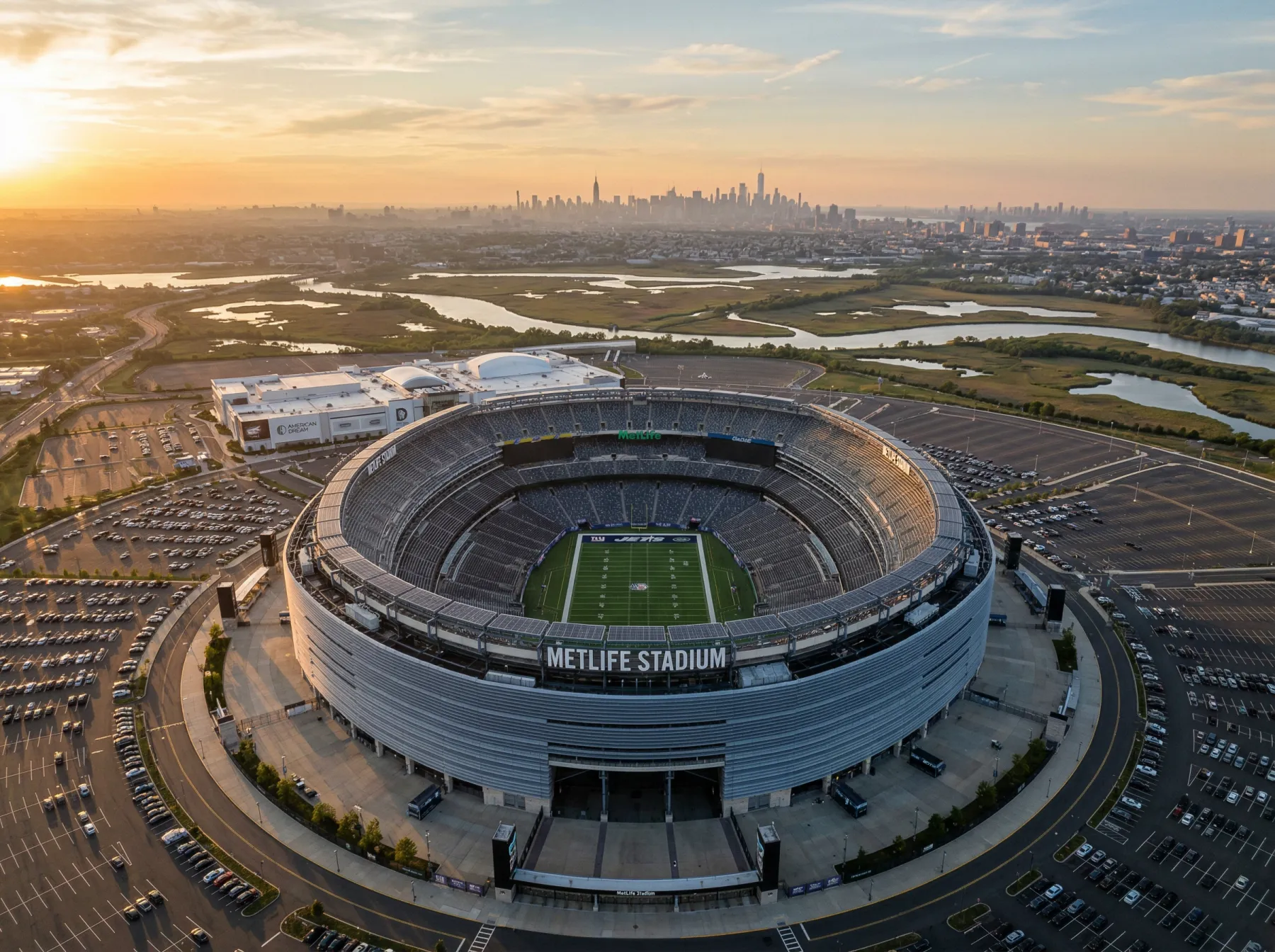
On 19 July 2026, the referee will blow the final whistle at MetLife Stadium in East Rutherford, New Jersey, and one nation will be crowned world champions. That single moment — 80,000 people, one stadium, the entire sport watching — is the reason every match across the previous 39 days matters. I have been inside MetLife for NFL games and international friendlies, and the scale of the place is genuinely imposing. It was not built for football in the European sense, but FIFA looked at the infrastructure, the capacity, the transport links, and the proximity to New York City, and decided this was the stage for the biggest match in the sport.
For Irish punters, the MetLife Stadium World Cup final represents the endpoint of every ante-post bet placed months before the tournament begins. Your outright winner pick, your top-scorer selection, your each-way dark horse — they all converge here. Understanding the venue, its quirks and its atmosphere is not just trivia. It is context that sharpens your tournament-long betting decisions.
The final stadium is the ultimate destination in our World Cup 2026 stadiums guide.
MetLife Stadium: The Numbers and the Story
Strip away the World Cup branding and MetLife Stadium is an American football cathedral. It opened in 2010, replacing the old Giants Stadium that had stood on the same site in the Meadowlands Sports Complex since 1976. The construction cost reached $1.6 billion, making it one of the most expensive stadiums ever built at the time. It hosts two NFL franchises — the New York Giants and the New York Jets — and its capacity for football (soccer) configuration sits at approximately 82,500, making it one of the largest venues in this tournament behind only Estadio Azteca.
The stadium is an open-air venue with no retractable roof, which is a significant detail for a July fixture in the New York metropolitan area. Summers in northern New Jersey are hot and humid — average July temperatures sit around 30 degrees Celsius, with humidity levels that can make the air feel thick and heavy. For teams that have progressed through seven matches to reach the final, the physical demands of playing in those conditions after a six-week tournament should not be underestimated. European and South American squads accustomed to different climatic conditions will have acclimatised by July, but fatigue accumulates regardless of adaptation, and the heat adds a layer of physical stress that can influence the final thirty minutes of a match.
The pitch itself will be natural grass — FIFA mandates it for World Cup matches — installed temporarily over the artificial surface that the NFL tenants use during their season. FIFA’s pitch management at previous tournaments has been meticulous, but temporary installations at American stadiums have occasionally produced surfaces that are slightly slower than permanent grass pitches. That matters tactically: a slower surface reduces the effectiveness of quick one-touch passing and benefits teams that rely on physical duels and aerial play. If you are backing a technically gifted side like Spain or Brazil in the final, the surface condition is worth monitoring through media reports in the days leading up to the match.
Architecturally, MetLife is functional rather than iconic. It lacks the dramatic design of SoFi Stadium in Los Angeles or the historical weight of Estadio Azteca. What it offers is scale, infrastructure and a location that connects to the largest media market in the United States. The sightlines for football are decent — the lower bowl sits close to the pitch, creating an atmosphere that can feel intimate despite the enormous capacity. The upper tiers are steep and distant, which reduces the sense of connection for fans seated there but creates a visual amphitheatre effect for television broadcasts.
World Cup 2026 Matches at MetLife
MetLife Stadium will host matches throughout the tournament, not just the final. FIFA typically assigns six to eight matches to the final venue, including group-stage fixtures, a round-of-32 match, and at least one quarter-final or semi-final. The specific allocation depends on the overall scheduling matrix, but you can expect MetLife to host at least two group-stage matches — likely involving high-profile teams that will draw large crowds in the New York area — plus knockout-round fixtures leading to the final.
The group-stage matches at MetLife will serve as early indicators of the pitch condition, the atmosphere and the logistical reality of attending or watching from this venue. If the surface plays slow in those early matches, that information feeds directly into your betting models for the final. If the atmosphere inside the stadium proves to be electric — driven by the massive diaspora communities in the New York area, where almost every nation has a significant population — then home-crowd effects could influence matches in unpredictable ways.
For betting purposes, the venue’s assignment of specific matches will be confirmed closer to the tournament. Once the match schedule is locked, cross-referencing the teams playing at MetLife with their tactical profiles will help you assess whether the venue favours certain styles. A physically dominant team that thrives in heat and humidity — think Uruguay or a well-conditioned African side — might gain a marginal edge at MetLife that the market does not fully price in. The complete stadiums guide covers how each venue’s conditions interact with different playing styles.
The Final: What 19 July Will Look and Feel Like
World Cup finals follow a rhythm that decades of broadcasting have made familiar. The stadium opens hours before kick-off. The pitch is inspected, photographed, and deemed ready. National anthems are played. A closing ceremony — shorter than the opening — precedes the match. Then 90 minutes of the most pressurised football on the planet, where mistakes are magnified and moments of individual brilliance become permanent entries in the sport’s history.
At MetLife, the final will kick off in the early evening local time — likely 4pm or 5pm Eastern Time on a Sunday — which converts to 9pm or 10pm in Ireland if FIFA selects the earlier slot, or potentially later if they push toward US prime time. Historically, FIFA has balanced the final’s kick-off time between European and American viewing audiences, and with this tournament being hosted in North America, the US audience will take priority. A 5pm ET kick-off — 10pm in Dublin — is the most likely scenario, though 8pm ET (1am IST) is possible if FIFA optimises entirely for American viewers.
The atmosphere inside MetLife for the final will be unlike anything the stadium has experienced. The NFL produces loud, passionate crowds, but a World Cup final brings a different energy — more sustained, more emotional, more globally charged. The New York metropolitan area’s extraordinary diversity means that almost any two finalists will have substantial supporter communities within driving distance of East Rutherford. Whether the final features Argentina and France (a repeat of 2022), Brazil and England (a dream matchup), or an unexpected pairing that no one predicted at the group stage, the crowd will be vast, divided and intensely partisan.
From a betting perspective, the final is the single match where I deviate most from my standard approach. The emotional weight of the occasion changes how teams play. Favourites frequently start cautiously, unwilling to risk an early deficit, which means the first half of World Cup finals tends to be cagey and low-scoring. Of the last eight World Cup finals, five were level at half-time. The under 1.5 first-half goals market is historically reliable in finals, and while the odds are typically short — around 4/9 — it provides a solid leg for accumulators if you are building a final-day betting card.
Extra time and penalties are a genuine possibility. Four of the last ten World Cup finals have gone beyond 90 minutes, and the intensity of the occasion compresses the quality gap between the two finalists, making drawn matches more likely. Backing “the match to go to extra time” at the prices typically offered — around 11/4 — has been a profitable position over a multi-tournament sample, though individual results vary enormously. If you back this market, do so as part of a broader final-day strategy rather than a standalone bet.
East Rutherford and the New York Connection
MetLife Stadium sits in East Rutherford, New Jersey — technically not in New York City, a distinction that New Yorkers and New Jerseyans will both insist you respect. The stadium is located in the Meadowlands, a flat expanse of marshland and sports infrastructure that also houses the American Dream mall and the Meadowlands Racetrack. It is approximately 12 kilometres from Midtown Manhattan, connected by bus routes and, for the World Cup, likely by enhanced shuttle services.
The New York connection matters because it shapes the crowd composition and the broader tournament experience. New York City is the entry point for hundreds of thousands of international fans travelling to the 2026 World Cup, and the city’s infrastructure — hotels, restaurants, transport, entertainment — is unmatched among the host cities. Fans arriving for the final will spend days in Manhattan and Brooklyn before making the journey across the Hudson River to East Rutherford on match day.
For Irish fans making the trip — and the Irish-American community in the New York area is one of the largest in the world — the logistics are straightforward. Direct flights from Dublin to JFK or Newark take approximately seven hours, and the stadium is closer to Newark Liberty Airport than to JFK. The Meadowlands area itself has limited accommodation, so most visitors will stay in Manhattan or Jersey City and travel to the stadium on match day. If you are planning the trip and intend to bet in person, note that sports betting is legal in New Jersey and available through mobile apps — you can place bets from your phone while sitting in the stadium, which creates a unique live-betting environment for those accustomed to watching from Irish pubs.
The cultural significance of hosting a World Cup final within sight of the Manhattan skyline should not be underestimated. FIFA chose this location deliberately: the image of the trophy being lifted with the New York backdrop is a global marketing moment that cements football’s presence in the American sporting consciousness. For the sport, it is a statement. For punters, it is simply the place where all our pre-tournament homework resolves into a single result — and whether that result lands in our favour depends on every decision we have made since the first odds were published months earlier.
What time is the World Cup 2026 final at MetLife Stadium in Irish time?
The final on 19 July 2026 is expected to kick off between 9pm and 2am Irish Standard Time, depending on the exact slot FIFA assigns. A 5pm Eastern Time kick-off would mean 10pm in Dublin, while an 8pm ET start would push to 1am IST. The precise time will be confirmed closer to the tournament.
What is MetLife Stadium"s capacity for the World Cup final?
MetLife Stadium"s capacity in football configuration is approximately 82,500 seats. It is one of the largest venues at the 2026 World Cup and was selected for the final due to its scale, infrastructure and proximity to New York City.
Prepare for the final on our home page.
